

Combi, System And Conventional Boilers
New Boiler Advice and Fittingfor Your Home
Picking a new boiler comes down to your bathrooms, your hot water habits and the space you have. We explain the choices clearly, then fit the one that suits your home.
New Boiler
A Choice Most People Make Two or Three Times
Most people only buy a boiler two or three times in their lives, so it is no surprise the choice feels confusing. Combi, system, conventional, kilowatts, cylinders, smart thermostats: the words pile up quickly. This page sets out what actually matters for a home in Walton on Thames, Weybridge or Esher, so you can have a sensible conversation with any installer.
Jake, Billy and the team fit new boilers in every kind of local home, from flats and terraces to large family houses in Cobham and Oxshott, and in extensions and conversions that need heating for the first time. We are qualified to install all the major brands, so our advice is about your home, not about one manufacturer.
Combi, System or Conventional: How Each Works
A combi boiler takes water straight from the mains and heats it as you use it, so there is no hot water cylinder and no tanks in the loft. It is compact and suits smaller homes and those with little storage space, but it is designed for one hot outlet at a time.
A system boiler heats water that is stored in a cylinder, usually in an airing cupboard. It is sealed and filled from the mains, so it needs no cold water tank in the loft, and the stored hot water can serve several taps and showers at once.
A conventional boiler, also called a regular or heat only boiler, also uses a cylinder, but it relies on a cold water storage tank and a small expansion tank in the loft. It is common in older homes and can suit houses with low water pressure or older pipework.
- Combi: hot water on demand, no cylinder, no loft tanks
- System: stored hot water in a cylinder, no loft tanks
- Conventional: cylinder plus tanks in the loft
Matching the Boiler to Your Bathrooms
The single best guide to the right type is how your household uses hot water. If you have one bathroom and nobody needs a shower while the kitchen tap is running, a combi is usually the simplest choice and frees up the airing cupboard.
If you have two or more bathrooms, or an en suite and a family bathroom that are busy at the same time each morning, a cylinder is usually the better answer. Manufacturers point out that a combi may struggle in larger homes with several bathrooms, while a cylinder can supply several outlets together.
A cylinder has another advantage people often forget: it can be fitted with an electric immersion heater, so you still have hot water if the boiler ever needs a repair. A combi cannot offer that backup.
Sizing It Properly, Not Just Bigger
Bigger is not better with boilers. Building Regulations guidance says heating systems should be specified from a heat loss calculation for the home and should not be significantly oversized. An oversized boiler switches on and off more often and wastes fuel.
For a system or conventional boiler, the output is chosen mainly from the heating demand of the house. For a combi, the output is usually set by the hot water flow you need, and the guidance asks for a model that can turn right down to the home's typical heating load. We work through both at the survey and explain the numbers to you.
Combi, System Or Conventional
Which Boiler Suits Your Home?
The single best guide to the right type is how your household uses hot water.
Answer the three questions to see the usual fit.Usually a good fit:
A Home Survey
- We look at your bathrooms, radiators, pipework, gas supply and flue route before recommending anything.
Why a Combi Boiler
A combi boiler takes water straight from the mains and heats it as you use it, so there is no hot water cylinder and no tanks in the loft.
- If you have one bathroom and nobody needs a shower while the kitchen tap is running, a combi is usually the simplest choice and frees up the airing cupboard.
- It is compact and suits smaller homes and those with little storage space, but it is designed for one hot outlet at a time.
- Manufacturers point out that a combi may struggle in larger homes with several bathrooms, while a cylinder can supply several outlets together.
Why a System Boiler
A system boiler heats water that is stored in a cylinder, usually in an airing cupboard.
- If you have two or more bathrooms, or an en suite and a family bathroom that are busy at the same time each morning, a cylinder is usually the better answer.
- It is sealed and filled from the mains, so it needs no cold water tank in the loft, and the stored hot water can serve several taps and showers at once.
- A cylinder has another advantage people often forget: it can be fitted with an electric immersion heater, so you still have hot water if the boiler ever needs a repair.
Why a Conventional Boiler
A conventional boiler, also called a regular or heat only boiler, also uses a cylinder, but it relies on a cold water storage tank and a small expansion tank in the loft.
- It is common in older homes and can suit houses with low water pressure or older pipework.
- If you have two or more bathrooms, or an en suite and a family bathroom that are busy at the same time each morning, a cylinder is usually the better answer.
- A cylinder has another advantage people often forget: it can be fitted with an electric immersion heater, so you still have hot water if the boiler ever needs a repair.
Good To Know
When a Cylinder Is Usually the Better Choice
- Two or more bathrooms in regular use
- Showers often running at the same time
- A large household with high hot water use
- Low mains water pressure or flow
- Older pipework that may not suit mains pressure
- You want an immersion heater as hot water backup
New Boiler
What You Get When We Fit Your New Boiler
-
A Home Survey
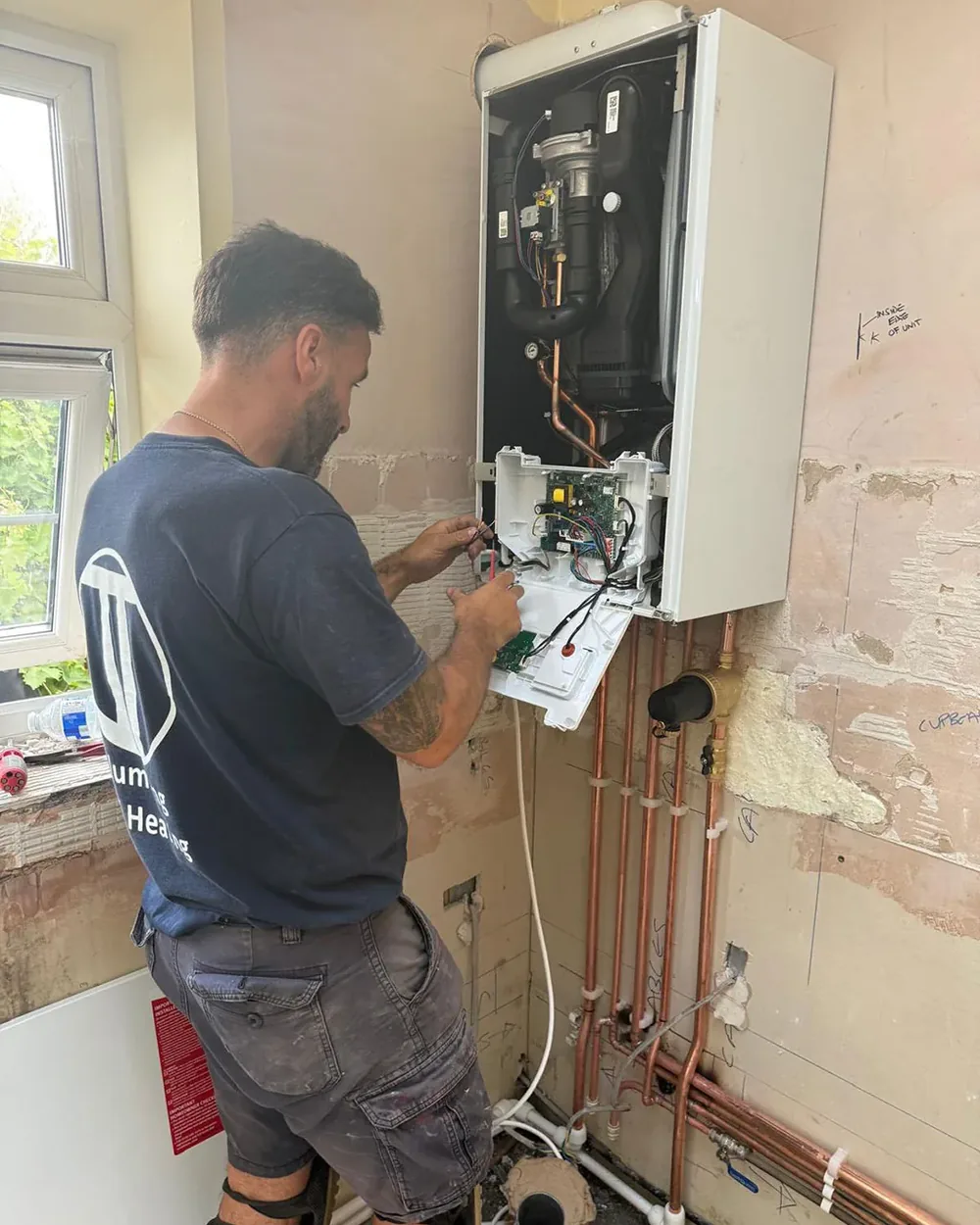
We look at your bathrooms, radiators, pipework, gas supply and flue route before recommending anything.
-
A Clear Recommendation
The boiler type and size that suits your home, with the reasons explained in plain English.
-
Fixed Pricing
A written quote with no hidden extras, so you know the cost before work starts.
-
Controls You Can Use
Time and temperature controls, with smart options where they suit how you live.
-
A Protected System
The system cleaned and treated before the boiler goes on, with a magnetic filter if you choose one.
-
Full Paperwork
Building Regulations notification, the commissioning checklist and warranty registration handled for you.
-
Where Your New Boiler Can Go
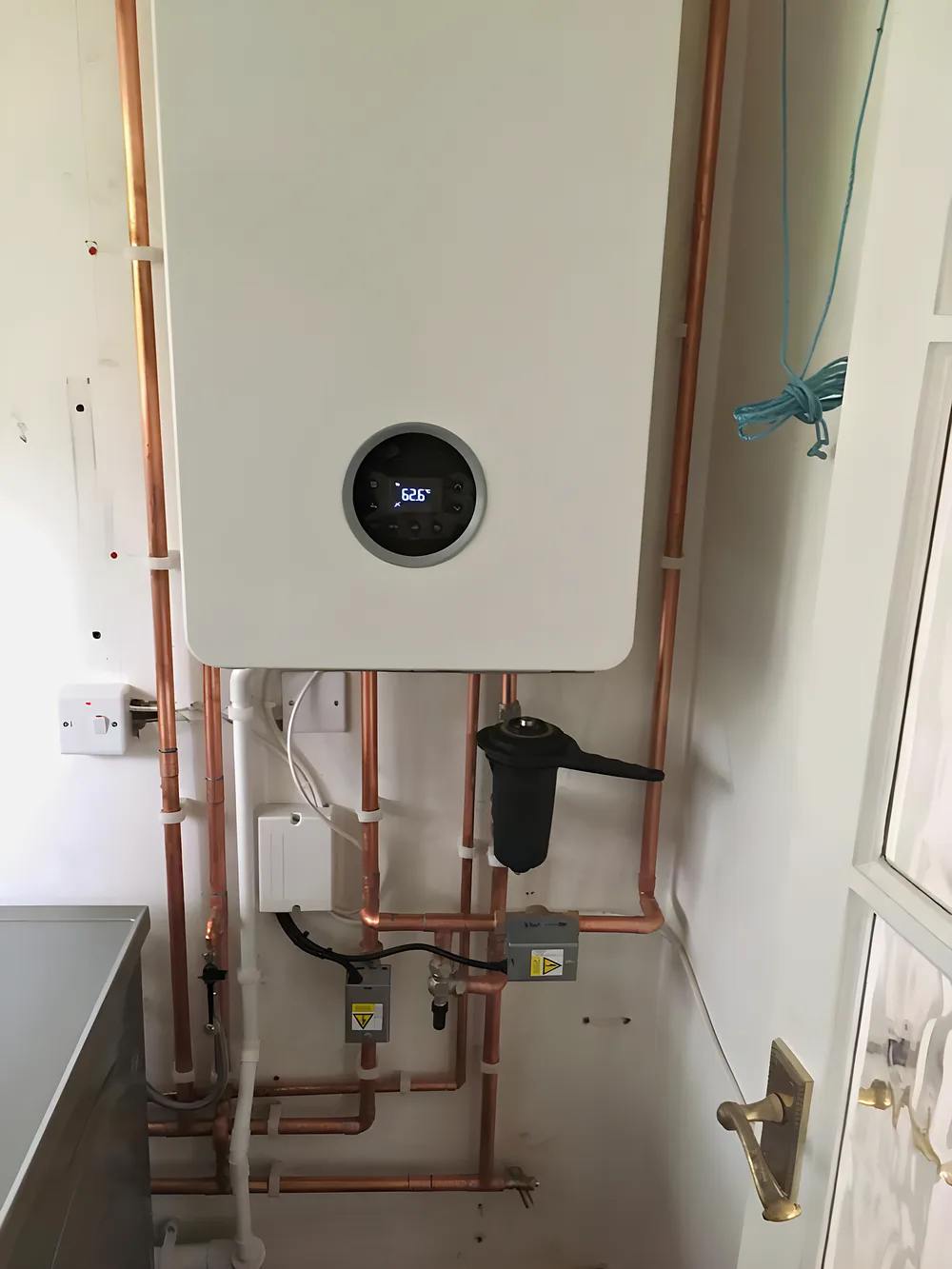
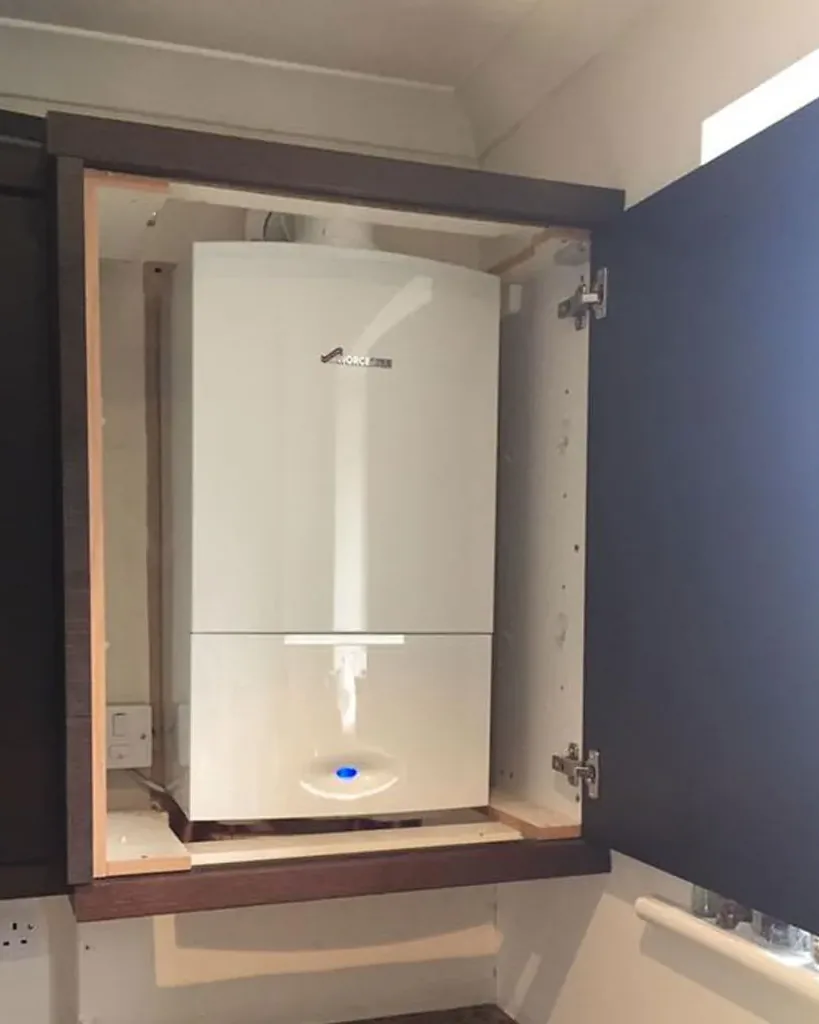
There is no single correct place for a boiler. Kitchens and utility rooms are popular because the condensate pipe needs to reach a drain, and a boiler can also sit in a cupboard, as long as the manufacturer's ventilation and clearance requirements are met. If the nearest drain is too far away, a condensate pump can help.
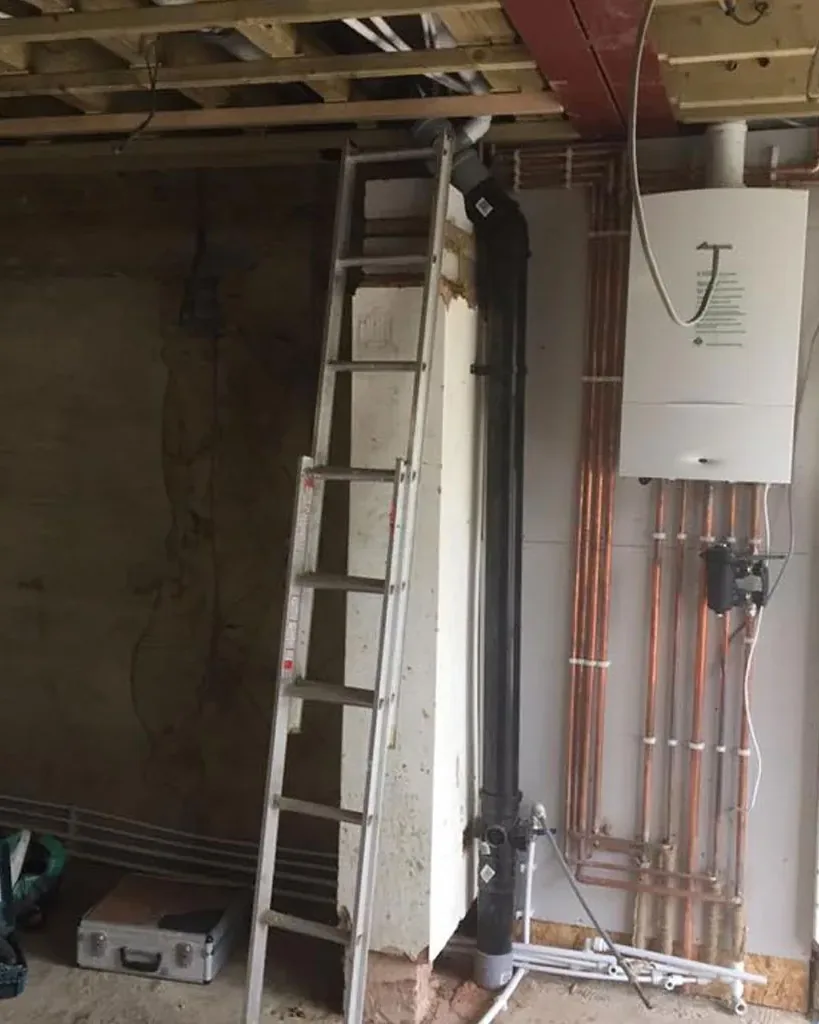
A boiler can go in a loft, but the space must be properly prepared. Manufacturers ask for permanent fixed lighting, a fixed loft ladder and a boarded floor around the boiler, and hot water may take a little longer to reach the downstairs taps. Boilers in garages and outbuildings may need frost protection.
The flue also has to be positioned safely, a set distance from opening windows, doors and air vents, and the condensate pipe should run inside wherever possible, or be insulated as the manufacturer specifies if it has to run outside.
-
First Time Installs in Extensions and Conversions
Extending a house or converting a loft changes what a heating system has to do. More rooms need more radiators or underfloor heating, and a new bathroom adds to the hot water demand. A boiler that suited the old house may now be too small, or the wrong type.
Loft conversions are a common reason to change system. The old loft tanks of a conventional system often have to go to make room, which leads naturally to a system boiler with a cylinder, or to a combi in a smaller home. Where a wet heating system is newly installed, Building Regulations guidance asks for radiators and pipework sized so the heating works at a flow temperature of 55°C or lower.
We are happy to work alongside your builder or architect, so the heating plan is settled before the walls and floors go in.
Controls That Make a New Boiler Work Well
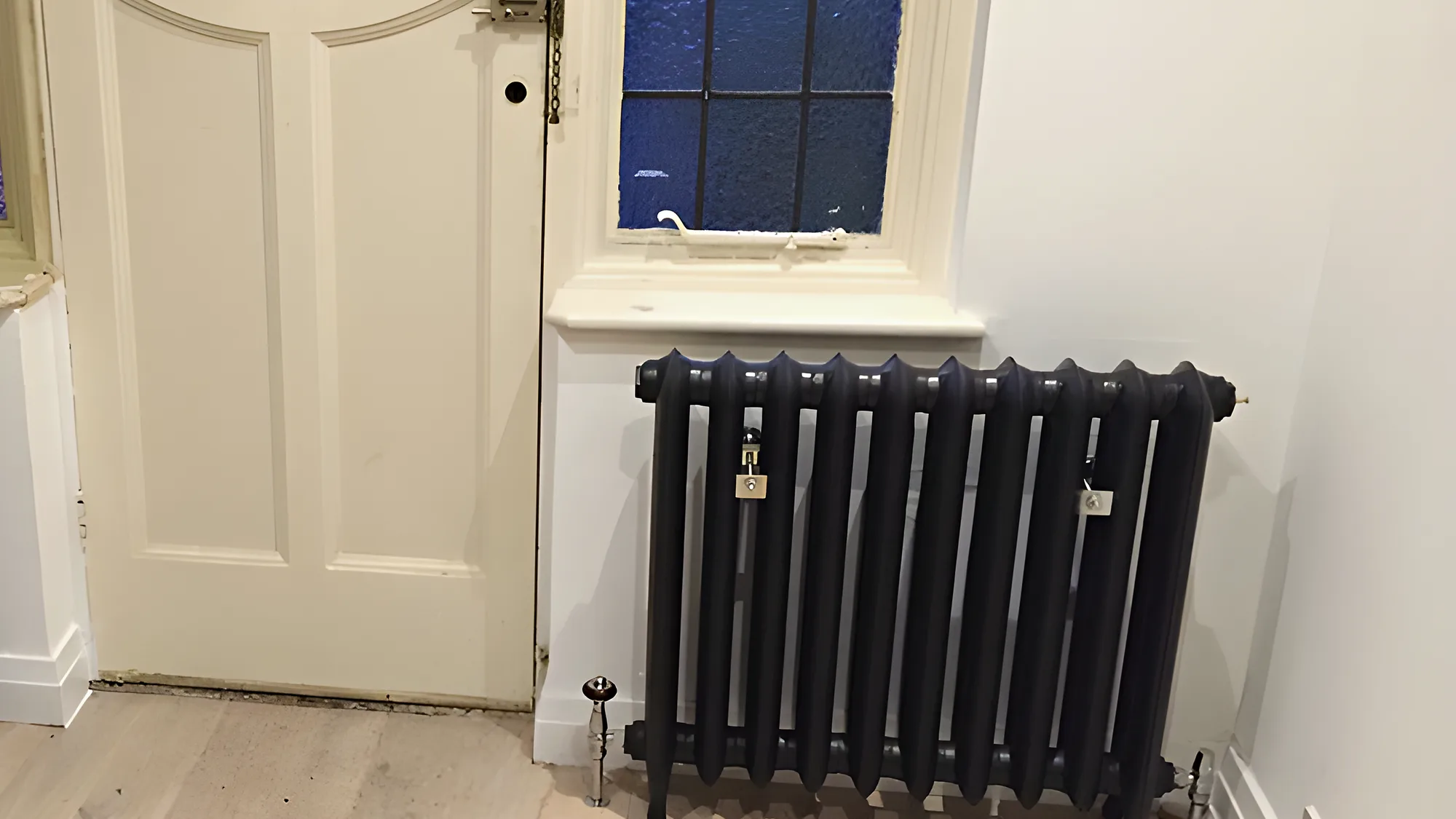
Every new gas boiler comes with time and temperature controls, and a new combi in an existing home needs an extra efficiency measure such as a smart thermostat that learns your routine. We help you pick controls that you will actually find easy to use.
Radiator valves matter too. Thermostatic radiator valves let you keep bedrooms cooler than the living room, and when a boiler is replaced the guidance expects each heated room to have its own thermostatic control.
What Our Customers Say
Highly recommend Jake & the team. They have installed my new boiler & radiators & did an excellent job. They have also installed my new kitchen appliances including a Quooker hot water tap. They are friendly & helpful a pleasure to work with.
Questions
New Boiler Questions
Is a Combi Boiler Right for a House with Two Bathrooms?
It can be, if the bathrooms are rarely used at the same time and your mains water supply is good. If two showers regularly run together, a system boiler with a cylinder usually gives a better result. We check your water pressure and flow at the survey before we recommend either.
Can I Keep My Hot Water Cylinder?
Often, yes. If your cylinder is in good condition and suits your needs, a new system or conventional boiler can be connected to it. If it is old or poorly insulated, we will tell you and explain the options.
Can a New Boiler Go in the Loft?
Yes, as long as the loft is prepared properly. Manufacturers ask for permanent lighting, a fixed loft ladder and a boarded floor around the boiler, so we check those at the survey.
Do I Need a New Boiler for My Extension?
Not always. It depends on how much extra heating and hot water the extension adds compared with what your current boiler can supply. We look at the plans and give you an honest answer before you commit.
Can You Move My Boiler to a Different Room?
Usually, yes. Moving a boiler means new gas, water and heating pipework, a new flue position and a new route for the condensate pipe, so it takes longer than fitting a boiler in the same place. We explain exactly what is involved in your quote.
Which Is More Efficient, a Combi or a System Boiler?
Every new gas boiler fitted in an existing home must meet the same minimum efficiency, so the difference comes from how well it matches your home. A boiler sized correctly for your heating and hot water, with good controls, will run more efficiently than the wrong type.
Related Services
More Ways We Can Help
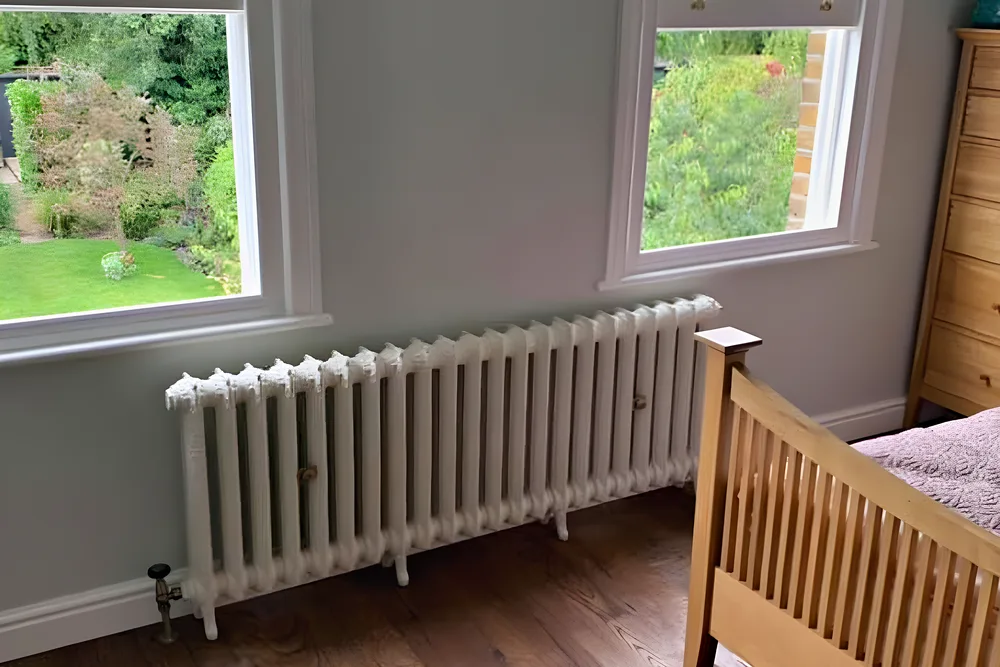 01Central HeatingRadiators, pipework and controls, installed and repaired.Find Out More
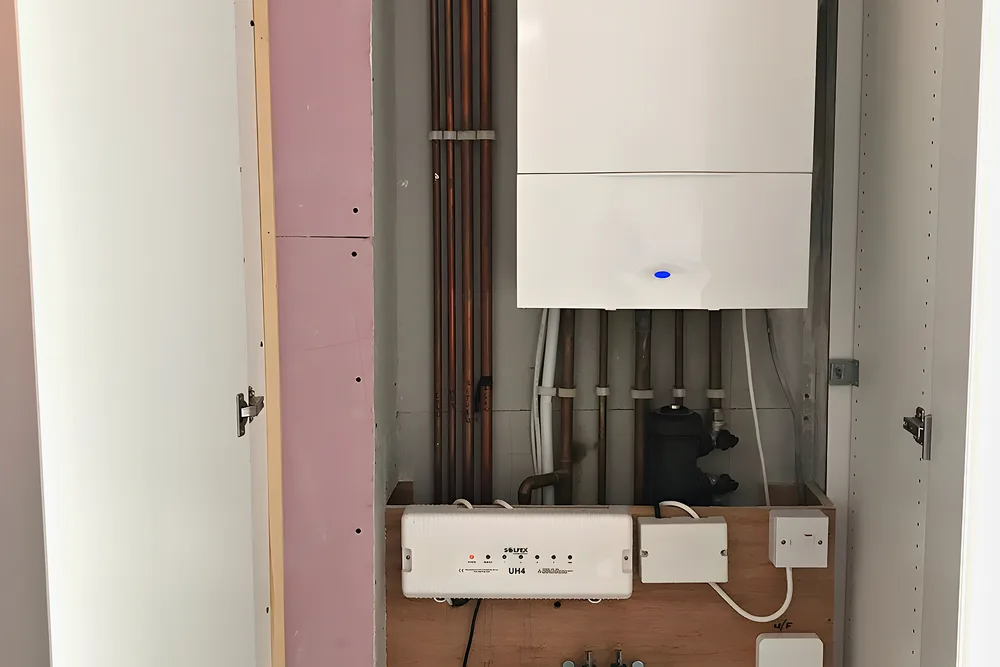 02Boiler ServicingAnnual servicing that keeps your boiler safe and in warranty.Find Out More
 03PlumbingLeaks, taps, toilets and pipework, put right first time.Find Out More
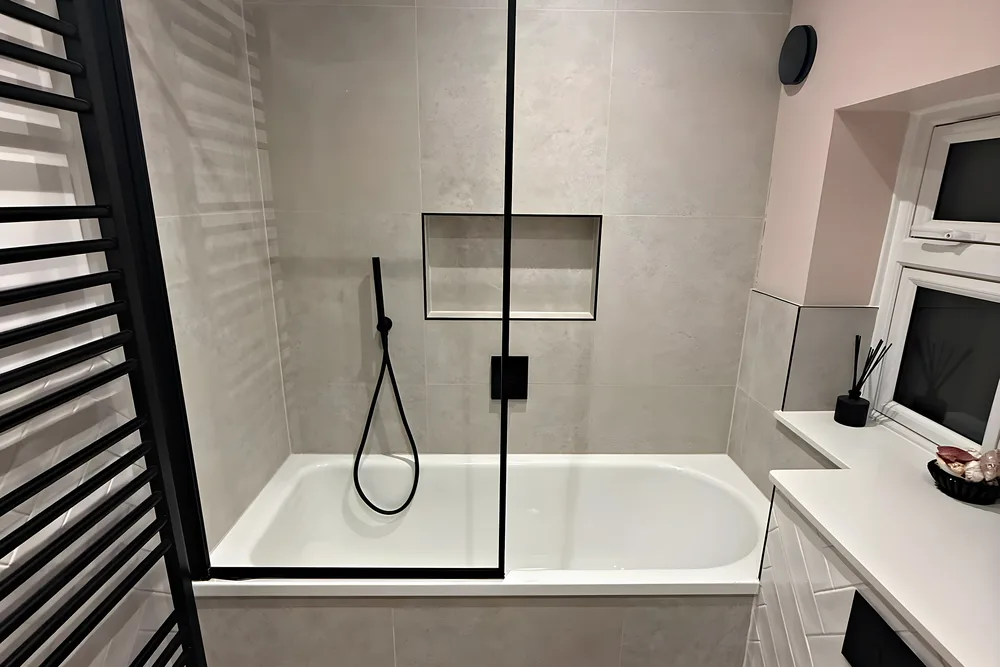 04BathroomsNew bathrooms and en suites, planned and fitted with care.Find Out More
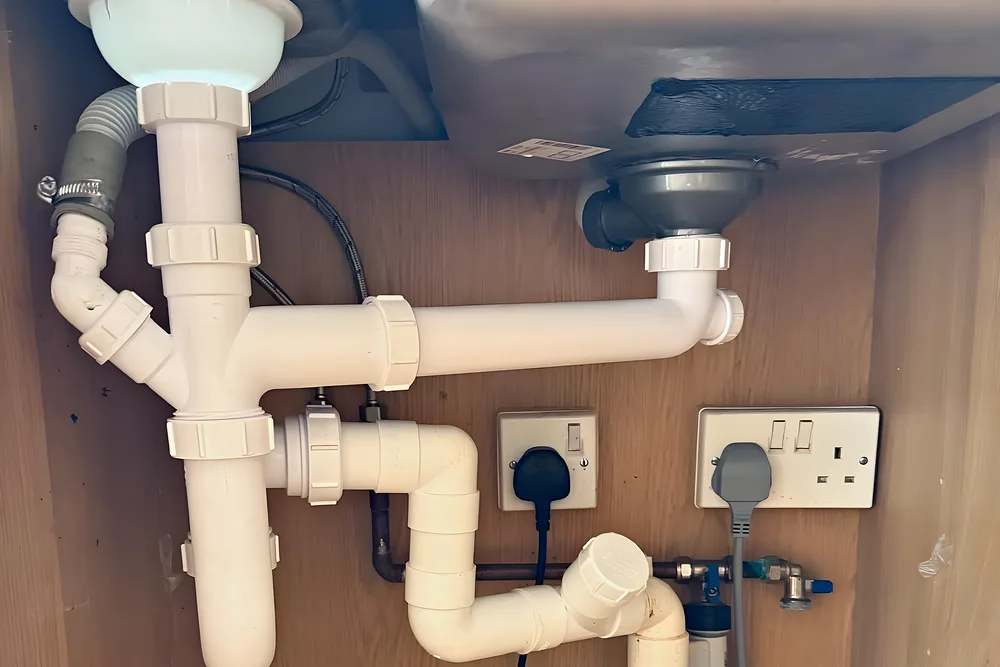 05Emergency WorkAround the clock call outs for urgent plumbing and heating.Find Out More
Get In Touch
Talk to Us About Your New Boiler
Tell us what you need and we will book a fixed appointment slot that suits you.
- Gas Safe Registered
- Fully Insured
- Fixed Appointment Slots
Where We Work
New Boilers Around Walton on Thames
Based in Walton on Thames, we cover Weybridge, Esher, Cobham, Hersham, Claygate, Oxshott, Molesey, Byfleet and Shepperton. If you are just outside these areas, please get in touch.
Areas We Cover