
Flow Gauges
Common FaultsFlow gauges on the manifold that flicker or show low, patchy flow often point to air.
What We DoLoops purged one at a time and refilled, with the system pressure checked afterwards.
Wet And Electric Systems
Cold patches, zones that will not respond or a floor that never warms up. We find underfloor heating faults on wet and electric systems without lifting your floor to look for them.
Underfloor Heating Repairs
Underfloor heating should be the quiet, even warmth you stop noticing. When part of the floor stays cold, a room ignores its thermostat or the whole system goes quiet, most homeowners fear a damaged pipe and a floor that has to come up. Most faults, though, are found in the parts you can reach: the manifold, the pump, the mixing valve, the actuators, the thermostats and the wiring.
Jake, Billy and the team repair water fed and electric underfloor heating across Walton on Thames, Weybridge, Cobham, Esher and the surrounding villages, in new builds, extensions and older homes that have had a system added. We work methodically from the boiler and controls to the manifold, so the repair is aimed at the actual fault rather than a guess.
At The Manifold
Flow gauges on the manifold that flicker or show low, patchy flow often point to air.
What We DoLoops purged one at a time and refilled, with the system pressure checked afterwards.
When one room stays cold while the rest of the floor is warm, the fault is usually specific to that zone. The actuator on that loop may have failed or its valve pin may have stuck.
What We DoZone actuators tested on every loop and replaced where they no longer open.
The pump may have failed, have air trapped in it or not be receiving power from the wiring centre.
What We DoFailed or noisy underfloor heating pumps tested and replaced, with air cleared from the pump.
The usual causes are poor flow from air or a failing pump, a mixing valve set too low, or thermostats and schedules that need adjusting.
What We DoStuck or worn mixing and blending valves freed or replaced so the floor runs at the right temperature.
If every zone is cold, the problem is usually something they share. The manifold isolating valves may have been left closed after other work.
What We DoIsolating valves, flow gauges and connections checked, leaks cured and each loop set to the right flow.
The wiring centre may not be passing the signal on.
What We DoRoom thermostats, floor sensors and wiring centres checked, replaced and set up with you.
The thermostat may have lost power or need new batteries.
What We DoWe test each in turn, starting at the thermostat.
Air in a loop stops the water moving, leaving a strip or a whole area of floor cold.
What We DoLifting a finished floor is the last resort, not the starting point. If we ever suspect damage under the floor, we explain the evidence and the options before anything is lifted.
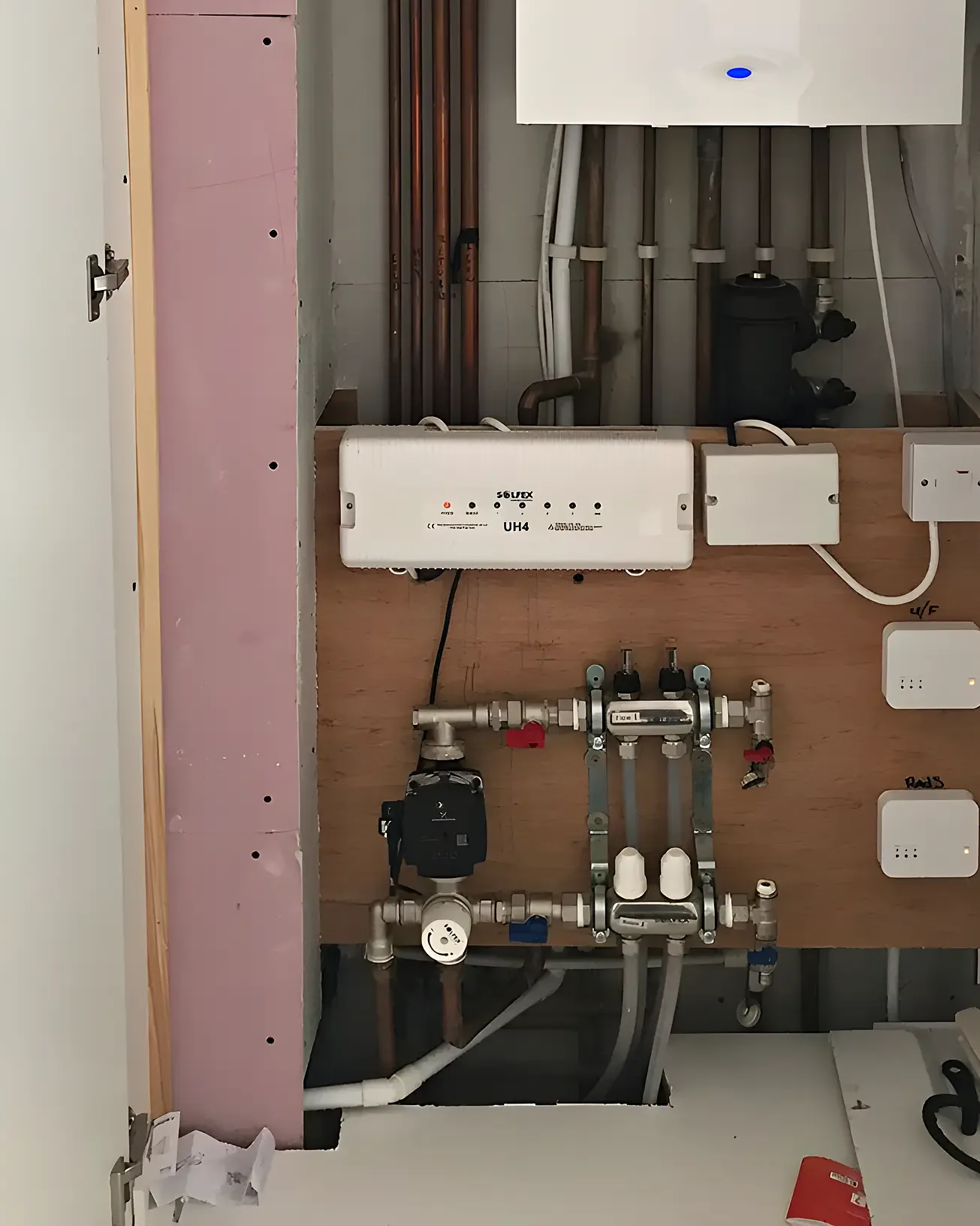
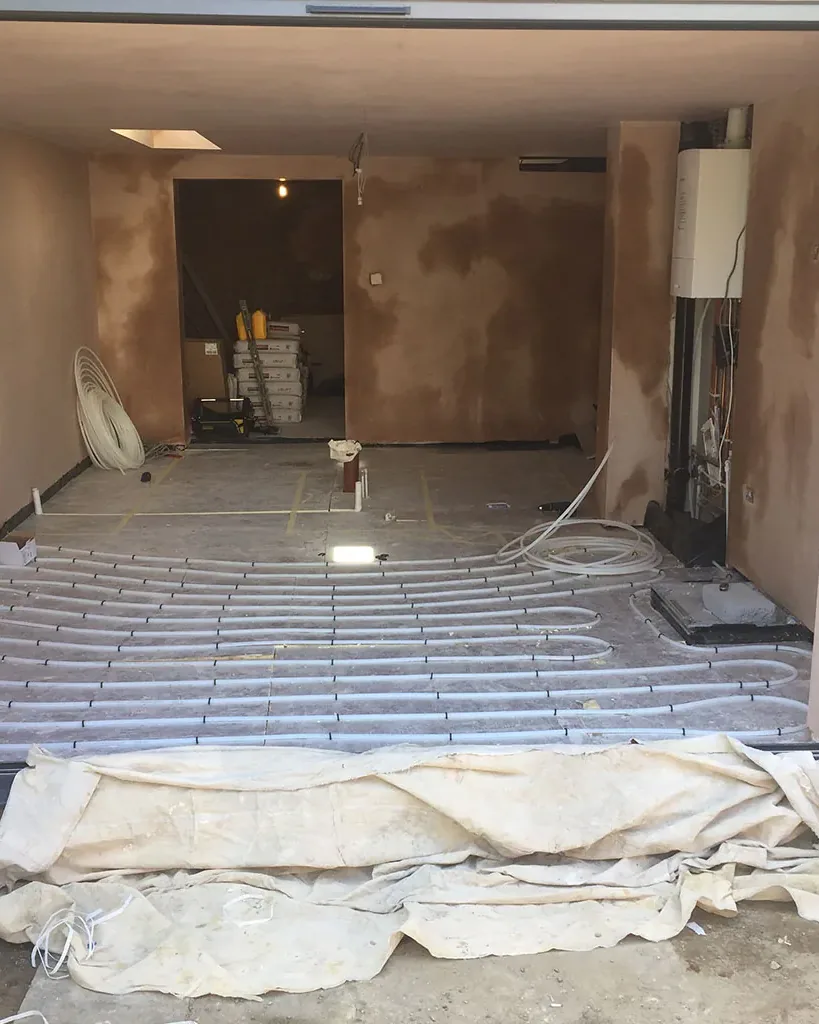
A wet system runs warm water from your boiler through loops of pipe laid in the floor. The loops meet at a manifold, usually in a cupboard, where a pump and a mixing or blending valve bring the water down to a temperature that suits the floor. Each room or zone has a thermostat, which tells an actuator on the manifold to open that loop when the room calls for heat.
Because a warm floor covers a much larger area than a radiator, the Energy Saving Trust notes that wet underfloor heating can run at lower boiler or heat pump flow temperatures than radiators. It also means that one fault at the manifold can affect several rooms at once, which is often the first clue we follow.
When one room stays cold while the rest of the floor is warm, the fault is usually specific to that zone. The actuator on that loop may have failed or its valve pin may have stuck, the thermostat may have lost power or need new batteries, or the wiring centre may not be passing the signal on. Manufacturers' own troubleshooting guidance starts with exactly these checks, including whether the actuator head has lifted a few minutes after the room calls for heat.
We test each part in turn rather than swapping parts in hope, replace the failed actuator or thermostat, and check that the zone opens and closes properly before we leave. Where thermostats have been moved or rewired over the years, we check that every zone answers to the right room.
If every zone is cold, the problem is usually something they share. The pump may have failed, have air trapped in it or not be receiving power from the wiring centre. The mixing valve may be stuck, the manifold isolating valves may have been left closed after other work, or the boiler may not be receiving the call for heat at all.
We start at the boiler and its controls, then work along to the manifold, checking the pump, the valve positions and the temperatures on the flow and return. A failed pump or mixing valve can usually be replaced at the manifold without disturbing any of the floor. If the boiler itself is at fault, our Gas Safe registered engineers can repair it on the same visit where the parts allow.
Air in a loop stops the water moving, leaving a strip or a whole area of floor cold. Flow gauges on the manifold that flicker or show low, patchy flow often point to air, and manufacturers describe purging the affected loops one at a time to clear it.
We purge and refill loops individually, set the flow through each one and check that the system pressure holds afterwards. If air keeps returning, we look for the reason, such as a slow leak or a fault in the way the system was filled, rather than simply purging it again next winter.
Lifting a finished floor is the last resort, not the starting point. Almost every working part of a wet system sits at the manifold or on the wall, and on an electric system the thermostat, sensor and connections can be tested without disturbing the tiles or boards.
If the evidence does point to a damaged pipe or heating cable under the floor, we show you the readings, explain what a repair would involve and talk through the options before anything is lifted. You have the full picture first, with fixed pricing and no hidden extras.
Underfloor Heating Repairs
Isolating valves, flow gauges and connections checked, leaks cured and each loop set to the right flow.
Failed or noisy underfloor heating pumps tested and replaced, with air cleared from the pump.
Stuck or worn mixing and blending valves freed or replaced so the floor runs at the right temperature.
Zone actuators tested on every loop and replaced where they no longer open.
Room thermostats, floor sensors and wiring centres checked, replaced and set up with you.
Loops purged one at a time and refilled, with the system pressure checked afterwards.
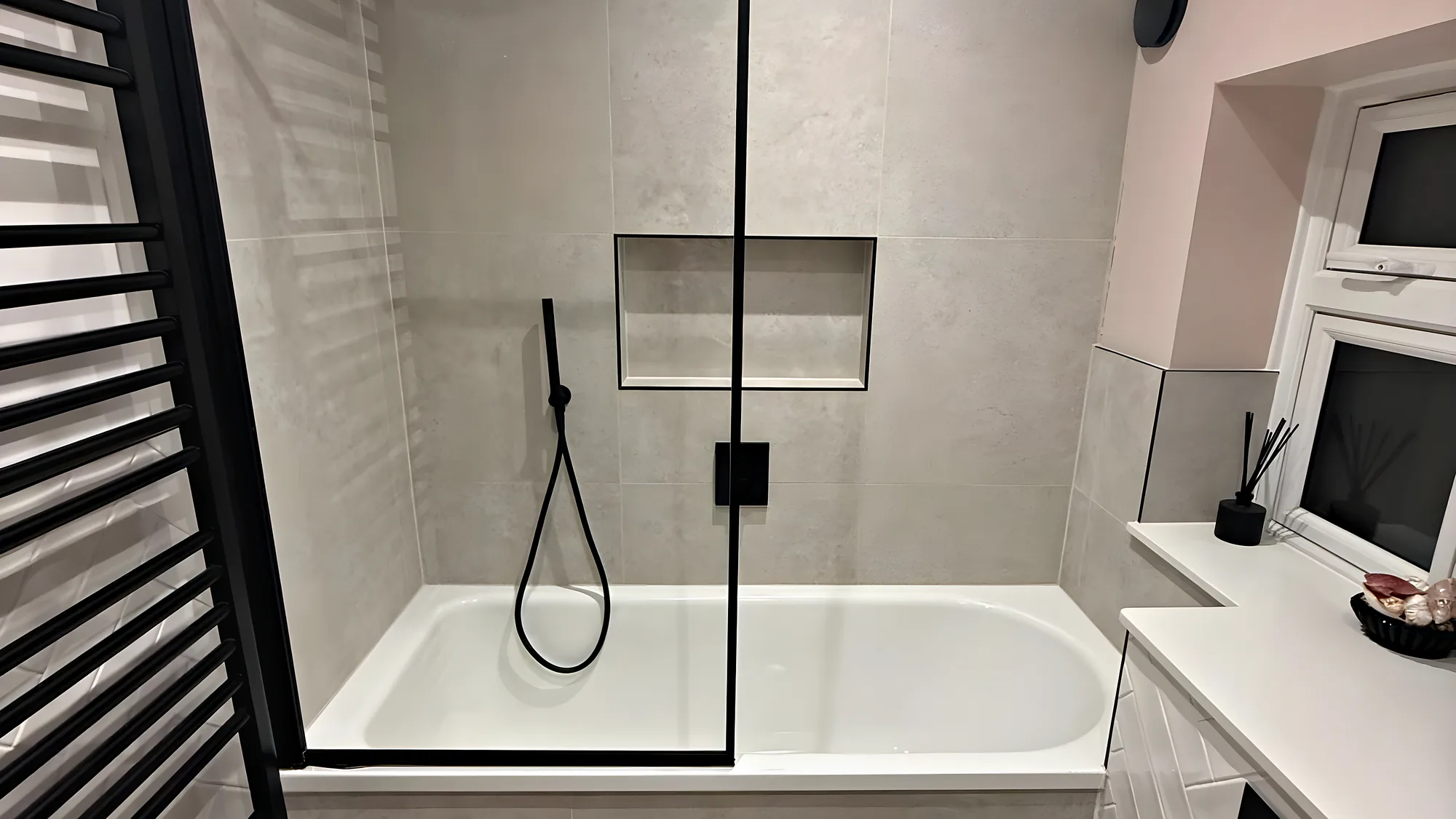
Electric systems use heating mats or cables under the floor finish, and they are common in bathrooms, en suites and kitchens where the aim is a warm floor underfoot. The Energy Saving Trust notes that they suit smaller areas and are cheaper to install than wet systems, but cost more to run over long periods or in larger spaces.
We start with the thermostat and its floor sensor, checking the settings, the schedule and the power it sends to the floor. Then the heating element itself is tested, which is how manufacturers such as Warmup tell a healthy mat from a damaged one. If the element tests correctly, the thermostat is the next suspect, and replacing it often brings the floor back to life.
Signs To Look Out For
Questions
Usually not. Most faults on a wet system are found at the manifold, the pump, the mixing valve, the actuators or the thermostats, all of which can be reached without touching the floor. If we ever suspect damage under the floor, we explain the evidence and the options before anything is lifted.
When a single zone is cold while the others work, the cause is usually local to that zone: a failed actuator, a stuck valve pin, a thermostat without power or flat batteries, or a wiring fault. We test each in turn, starting at the thermostat.
Yes. We check the thermostat, floor sensor and schedule, test the power reaching the floor and test the heating element. If the element is healthy, the thermostat is the next part to look at, and replacing it is often the cure.
Yes. Many homes have underfloor heating downstairs or in an extension and radiators elsewhere, all from one boiler. The underfloor side runs cooler through its own mixing valve, so when a fault appears we check the boiler, its controls and the manifold together.
Underfloor heating warms a whole floor rather than a radiator, so it responds more slowly and some delay is normal. If it has become much slower than it used to be, the usual causes are poor flow from air or a failing pump, a mixing valve set too low, or thermostats and schedules that need adjusting.
Yes. We can look over the manifold, pump and controls on the same visit as your annual boiler service, checking for leaks, air and valves that have stuck during the warmer months.
No questions match those words. Try another word, or call us and ask.
Related Services
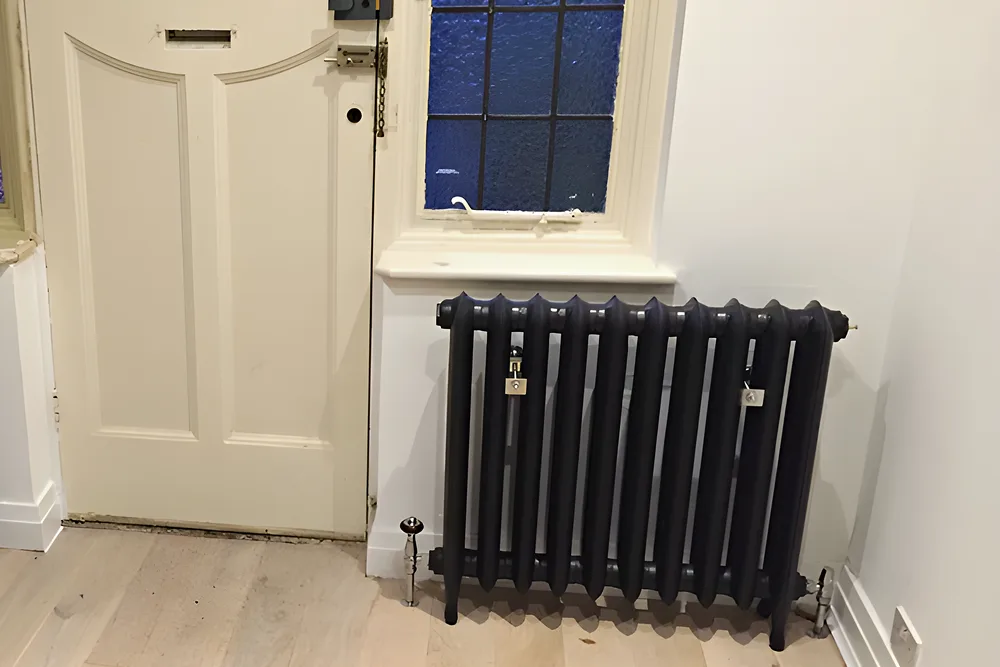 01Central HeatingRadiators, pipework and controls, installed and repaired.Find Out More
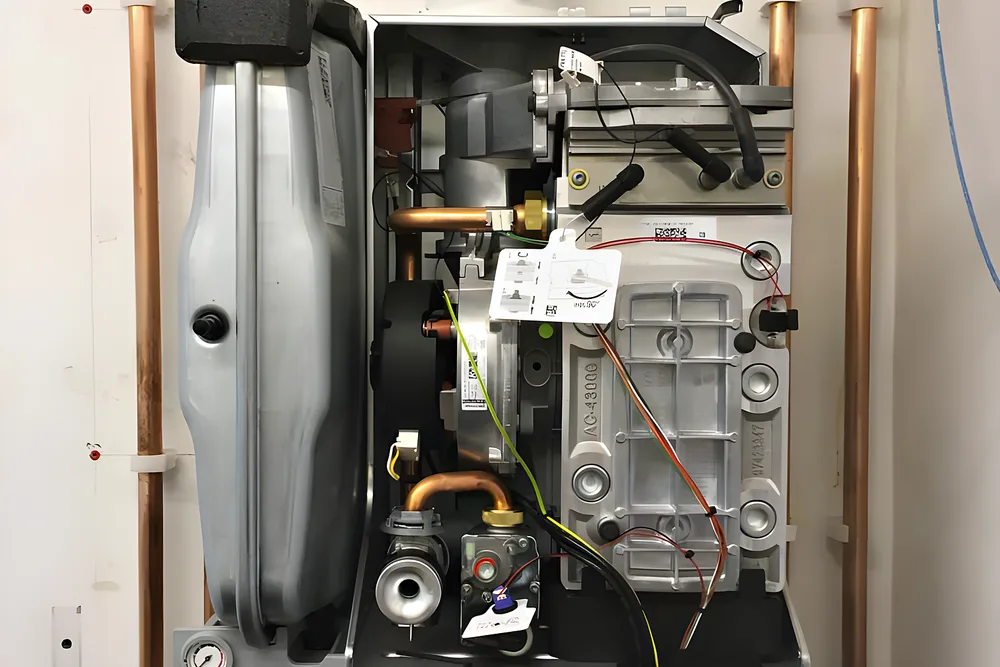 02Boiler RepairsFast fault finding and repair when your boiler breaks down.Find Out More
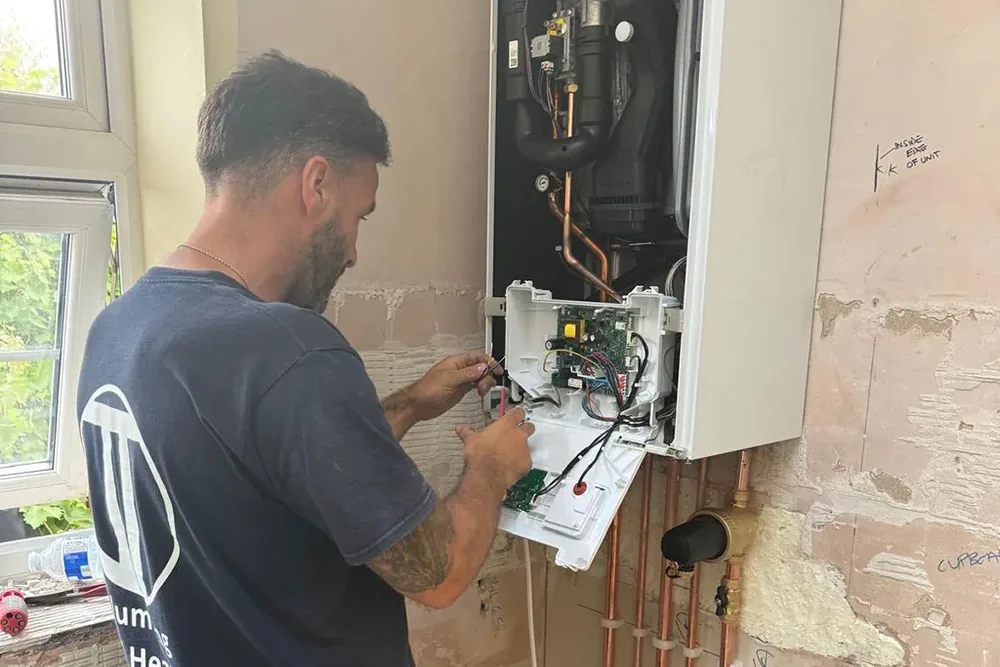 03Boiler ServicingAnnual servicing that keeps your boiler safe and in warranty.Find Out More
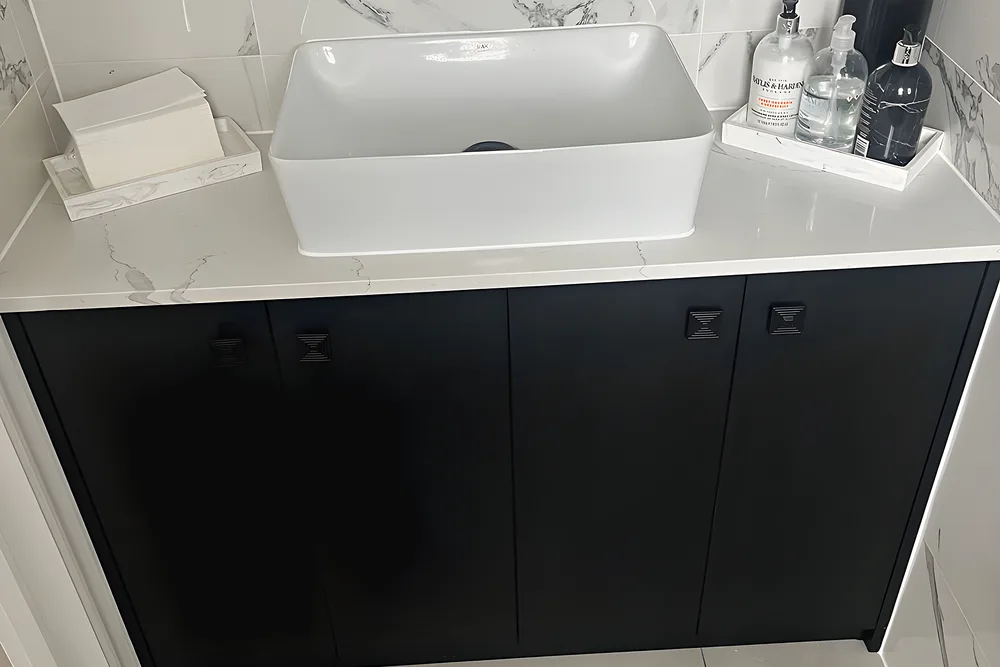 04PlumbingLeaks, taps, toilets and pipework, put right first time.Find Out More
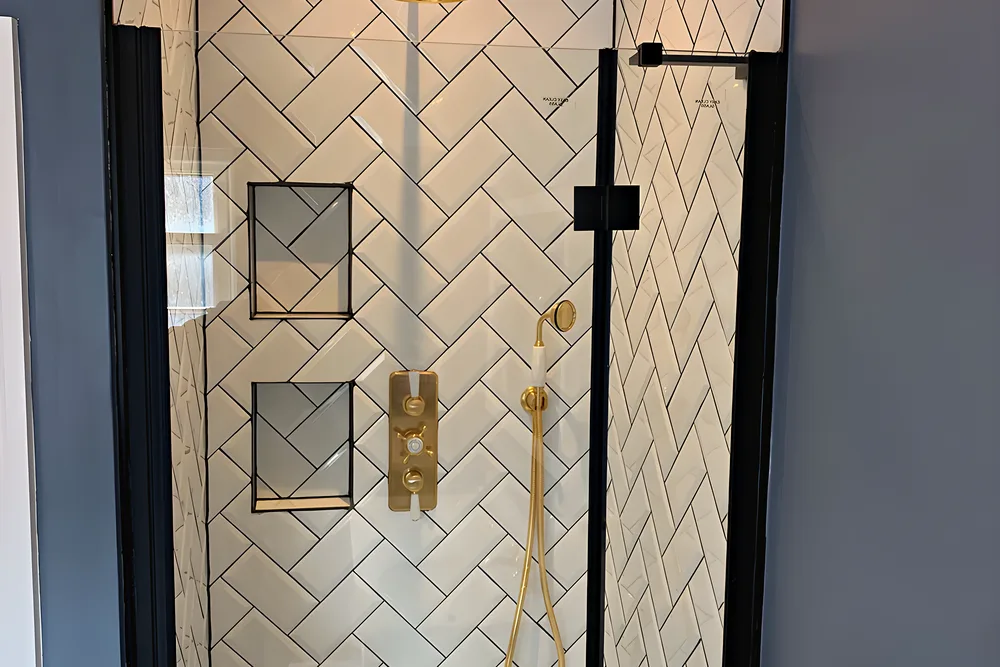 05BathroomsNew bathrooms and en suites, planned and fitted with care.Find Out More
Get In Touch
Tell us what you need and we will book a fixed appointment slot that suits you.
Where We Work
We carry out underfloor heating repair in Claygate, Walton on Thames, Hersham, Esher and Shepperton, and in Cobham, Oxshott, Molesey, Weybridge and Byfleet, on wet and electric systems.
Areas We Cover